AI and the future of work: Fidamy at EB NEXT! 2026
Our CTO joins the University of Amsterdam's panel on AI, skills and roles, at an evening closed by DNB President Olaf Sleijpen
16 February 2026Category: Company

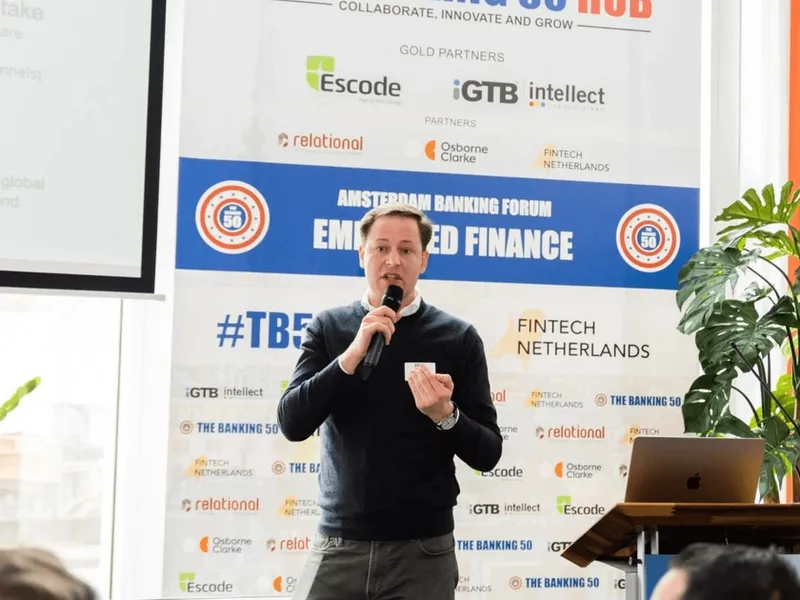
On 17 February, our CTO Liam Goodman joins the panel on AI, skills, roles and the future of work at EB NEXT! 2026, the annual event of the University of Amsterdam's Faculty of Economics and Business. The evening brings alumni, staff and students together at the Roeterseiland campus to discuss the economic, business and societal questions of the moment.
Liam joins Henk Volberda, Professor of Strategy and Innovation; Eleni Georganta, Assistant Professor of Work and Organisational Psychology; Marco Rapp, Assistant Professor of Digital Citizenship and People Analytics; Edo Roos Lindgreen, Professor of Data Science in Auditing; and Olga Kolesnikova. Together they will look at how AI changes work, which skills and roles organisations will need, and whether AI is a threat, an opportunity or both.
After the panels, Dean Roel Beetsma welcomes guests and Olaf Sleijpen, President of De Nederlandsche Bank, gives the closing keynote on economic resilience in an uncertain world.
Why the question matters to us
For Fidamy, AI and the future of work isn't an abstract debate. We're a small team building an AI-native embedded insurance platform, and AI already shapes how we build, sell and serve customers.
AI-driven development
Our engineers work with AI coding agents every day. The agents write, test and refactor code; the engineers decide what to build, set the constraints and review the result. A small team can now ship what used to need a much larger one.
That changes the job. Less time goes into writing code line by line, and more into architecture, clear specifications and judging whether the output is right.
Beyond engineering
The same shift runs through the rest of the company. Meeting notes turn into CRM updates without anyone retyping them. We're bringing AI into customer support. And we're centralising our operational data, so AI can work with it safely and under control.
Foundations first
The less visible lesson is that AI is only as useful as what it can reach. Before we add AI to a process, we get the data, access, configuration and integrations in order. That groundwork is what makes the visible part work.
Roles or skills?
The panel asks whether AI is mainly about roles or skills. Our experience so far: roles move up a level, from doing the work to directing and checking it. The skills that matter most are the ones AI doesn't supply: judgement, domain knowledge and the ability to define what good looks like.
Not everything should be handed to AI, and some work is better kept human. In insurance, one rule doesn't change: every decision that affects a customer has a person who is accountable for it. AI changes who does the work, not who answers for it.
If you're at EB NEXT! on 17 February, come and find Liam at the reception. And if you're an engineer who wants to build this way, see our open positions (opens in a new tab).